Aborted plan to spirit Mary out of England
The King's CurseThe aborted plan to spirit Mary out of England was Margaret Pole’s attempt to protect Princess Mary after Queen Katherine’s death left her politically exposed. Margaret and her sons Montague and Geoffrey prepared a covert extraction from Hunsdon, including a selected guard, a route around London, and a ship waiting near the Thames. The operation did not proceed: Geoffrey discovered that Anne Boleyn had offered Mary friendship and secured more generous treatment for her. The reversal makes the episode a narrow passage between danger and reprieve, in which a rescue plan becomes unnecessary before it can be carried out.
Causes and Immediate Danger
Margaret’s decision followed the death of Katherine of Aragon, whom she understood to have been both Mary’s protector and a witness to the king’s conduct. Montague agreed that Henry VIII would not have moved against Mary while her mother lived: doing so would have required him to attaint the queen before acting against his daughter. With Katherine gone, Mary was, in Montague’s assessment, the only person in England who refused to swear to the king’s oath. Her refusal made the question of her safety more urgent than a distant political concern.
Margaret’s response is decisive and personal. She tells Montague that the time has come to act and that Mary’s life is in danger. The plan is not presented as an abstract possibility or a debate over whether to intervene; Margaret commits to the risk and gives her son a direct task. The urgency rests on the changed position created by Katherine’s death and Mary’s isolation, not on a reported arrest or an attack already underway.
Arrangements for Escape
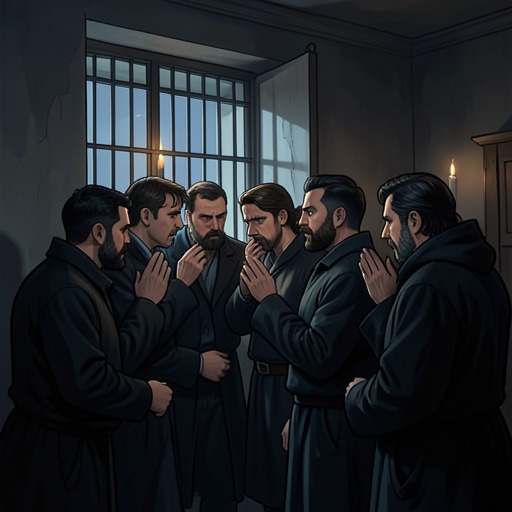
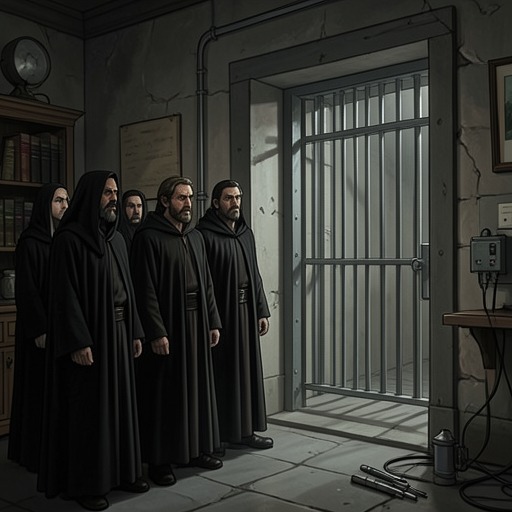
Margaret remains in London while Montague and Geoffrey make preparations. They handpick a guard to ride to Hunsdon and seize the princess, plan a route that skirts London, and hire a ship to wait at one of the small Thames-side villages, such as Grays. The details reveal an operation intended to move Mary discreetly from her place of confinement to an exit by water. It is a coordinated plan, with an escort, a land route, and transport arranged in advance, rather than a spontaneous attempt to take her away.
The conspirators decide not to tell the Spanish ambassador. Margaret recognizes that his affection for Mary and grief for Katherine do not make him a reliable participant in a dangerous secret. She considers him fearful and worries that, if Thomas Cromwell arrested him, he would disclose the plan quickly. The decision to exclude him shows the limits of the rescuers’ trust: even a potential ally with close ties to Mary is judged too vulnerable to pressure to be brought into the scheme.
Geoffrey pursues a more discreet opening at Hunsdon. After waiting patiently and bribing people there, he brings into his service the boy who lights the fires in the bedchambers. The boy’s position offers a way to gain information or access within the household, although the account does not specify exactly what assistance he is to provide. Geoffrey returns home visibly relieved. His progress has brought him close enough to the princess to see her, but the news he carries changes the purpose of the mission.
Anne Boleyn’s Intervention
Geoffrey reports that Mary is safe for the moment and that getting her away would have been nearly impossible. The unexpected development is that Mary has received letters from Anne Boleyn urging a friendly relationship and offering herself as someone Mary can turn to in grief. Geoffrey has also seen Mary: by Anne’s order, she is allowed to walk in the garden, receive visitors, and receive letters brought by the Spanish ambassador. These concessions directly alter the conditions that had made Margaret’s extraction plan seem necessary.
The change is striking because the proposed rescue was organized around Mary’s isolation, while Anne’s intervention offers contact and greater freedom without taking Mary out of England. It does not erase the political conflict surrounding Mary’s refusal to swear the oath, nor does the episode establish that all danger has passed. Instead, it gives Margaret and her sons reason to pause: the immediate situation has shifted, and the carefully arranged escape is no longer the only means of responding to Mary’s vulnerability.
Political Reversal and Significance
Geoffrey offers a political explanation for Anne’s new approach. While Katherine was alive, he reasons, Henry had no choice but to remain with Anne and was driven to press on with the destruction of the Church. Now the king is a widower, his quarrel with the emperor is over, and he is safe from invasion. Geoffrey believes that Henry no longer needs to quarrel with the Holy Father and can legally marry Anne if he chooses. In this changed setting, he sees no reason the king could not reconcile with Mary, since a son born to Anne would inherit before her.
This explanation is Geoffrey’s interpretation of the change, not proof that the king has already reconciled with Mary. Its importance lies in the altered calculation: Mary’s position may be less immediately precarious if Henry’s marriage and succession can be settled on terms that leave her behind a future son. The episode therefore turns on competing forms of protection. Margaret’s is clandestine and practical, involving bribery, a guard, a route, and a ship; Anne’s is an official easing of Mary’s restrictions, communicated through letters and permission to receive visitors. The rescue plan’s failure to reach its final stage is not a failed escape attempt but the consequence of circumstances changing before the escape is made.